Solar Panels, Batteries and EV Charging: Updating Your FRA Template
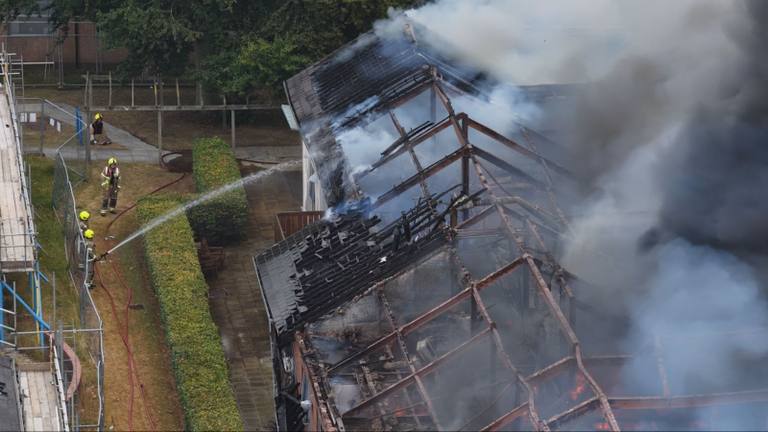
On 8 July, a fire destroyed the Springwood unit at Malton and Norton District Hospital in North Yorkshire. Fifteen patients were evacuated and nobody was hurt. North Yorkshire Fire and Rescue Service found that the fire most likely started at one of the solar panels on the roof.
It isn't an isolated case. Fires in England with solar panels or photovoltaic panels mentioned rose from 39 in 2020 to 81 in 2025.
Solar arrays, battery storage, e-bikes and EV chargers have arrived on buildings faster than most FRA templates have been updated to ask about them. If you're working through yours — and BS 9792:2025 has a lot of assessors doing exactly that — here's what to make sure it captures.
Solar PV
BS 9792 lists photovoltaic panels and their associated control gear at clause 13.2c) as a source of fire that every FRA should include. Your template needs fields for:
- Whether an array is present, and where the panels are
- Whether photovoltaic control gear — inverters, isolation switches — is present, and where it is located
- Whether that location is ventilated, and what is stored around it
- Whether DC isolators are present, labelled and accessible
- Whether isolation facilities are available for firefighters
The ventilation and storage points matter more than they might look. Annex B of the standard gives the mitigation for this hazard as adequate ventilation and fire separation. Inverters generate real heat, and they are often fitted in lofts and cupboards that later fill up with whatever the building has nowhere else to put.
Solar panels also appear in the standard's external wall section, listed alongside rainscreen cladding and balconies as an attachment that might comprise combustible material — so if your template has a fire spread over external walls section, panels belong in it.
Battery energy storage
The same clause covers high-density electricity storage: lithium-ion batteries, silicon batteries, and their control gear. Capture:
- Whether any battery storage is present
- Where it is located, and whether it is separated from escape routes and common parts
- Whether it is co-located with PV control gear
Battery installations often go in alongside an array, so a template that asks about one should ask about the other in the same breath.
E-bikes, e-scooters and mobility scooters
Separate from fixed installations, BS 9792 treats the storage, charging and use of battery-powered mobility scooters, e-bikes and e-scooters in common areas and escape routes as a situation that can lead to a fire. Also covered: storage facilities for these that are accessed directly from an escape route.
Your template should ask:
- Whether these are being stored or charged in common parts
- Whether dedicated storage or charging facilities exist, and where they are
- Whether there is a policy, and whether it is being followed
EV charging
Charge points get lighter treatment in the standard, but they do appear — specifically under signage, as an example of a warning sign to check for, alongside photovoltaic supplies. If a building has charging infrastructure, your template should capture its location, its proximity to the building and to escape routes, and whether it is signed.
Signage and firefighter information
One cross-cutting point that's easy to leave out. All of these installations create things attending crews need to know about before they commit. Make sure your template asks whether:
- Warning signage is present for PV supplies and EV charging points
- Isolation facilities are provided and findable
- The installations are reflected in the secure information box and the emergency plan
Starting from a template that already covers this
Rebuilding a template around modern energy risks is a decent chunk of work, and it's work most assessors would rather not repeat every time a standard moves.
FireCheckr's professional templates are built to BS 9792:2025 and PAS 79-1 and already include questions covering solar PV, battery storage, e-bike charging and EV infrastructure.
You can use them as they come, adapt them, or upload the template you already use in minutes.
Once you're ready, you can start using our AI platform to save hours on every report. Simply talk into your phone on site and our AI will have a first draft of your report waiting for you review when you get back to your desk.
Try it free and see how it handles your next assessment.
Related articles

From PAS 79-2 to BS 9792: What Actually Changed and What You Need to Do Differently

The Golden Thread: Why It Matters for Fire Risk Assessors, Not Just Building Owners