BAFE SP205 Version 6 Is Here: What It Means for Your Assessment Workflow
The updated scheme takes effect on 31 March 2026. Most of the commentary so far has been aimed at duty holders. This article is for the firms actually delivering fire risk assessments.
BAFE SP205 has been the UK's benchmark certification scheme for fire risk assessment organisations since its introduction in 2012. Version 6, published on 7 November 2025 and effective from 31 March 2026, is the most substantial revision in the scheme's history — and the transition period is now over. From 1 April 2026, all certification audits by NSI and SSAIB will be conducted against V6 requirements.
If you hold SP205 certification, or you're considering applying, here's what you need to understand about what's actually changed and what it means for how your firm operates day to day.
What SP205 certifies (and what it doesn't)
It's worth restating the fundamentals, because they're often misunderstood — even within the industry.
SP205 is a UKAS-accredited, third-party certification scheme for organisations, not individuals. It certifies that your firm has the management systems, quality assurance processes, and competence frameworks necessary to deliver fire risk assessments to a consistent, auditable standard. It doesn't certify that any particular assessor is competent — that's the domain of BS 8674:2025, the new competency standard for individual fire risk assessors.
SP205 also doesn't cover fire risk appraisals of external wall construction and cladding (FRAEWs), destructive inspections, or fire engineering services. Its scope is general fire risk assessments for life safety purposes.
For duty holders and responsible persons, appointing a BAFE SP205-certified firm is widely regarded as the strongest evidence that they've taken reasonable steps to engage a competent provider. It doesn't transfer legal responsibility — that stays with the responsible person — but it carries real weight with enforcement officers, insurers, and the courts.
The key changes in Version 6
BAFE and the certification bodies intentionally decoupled the publication and effective dates for V6. This was an unusual step, driven by the scale of the changes. Certification bodies needed time to update their audit processes and checklists, and certified organisations needed time to prepare. That preparation window has now closed.
The changes cluster around three areas that directly affect how your firm operates.
Alignment with BS 8674's competency tiers
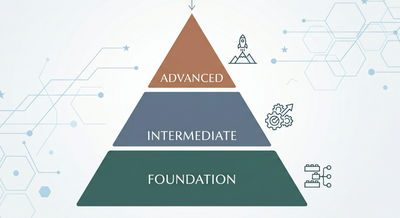
This is the headline change. SP205 V6 is explicitly mapped against BS 8674:2025, the new British Standard for individual fire risk assessor competence. Like BS 8674, the scheme now takes a tiered approach, recognising fire risk assessors at Foundation, Intermediate, and Advanced levels.
What this means in practice: your firm's competency management system needs to demonstrate how each individual assessor is mapped against these tiers. When your certification body audits you, they'll want to see that you've identified which level each assessor operates at, that you're assigning work appropriate to those levels, and that you're not allowing assessors to work beyond their demonstrated competence.
A Foundation-level assessor shouldn't be assessing a complex high-rise residential block. An Intermediate-level assessor shouldn't be signing off assessments on specialist premises requiring Advanced-level expertise. The tiering isn't just administrative — it needs to be reflected in your actual work allocation.
The good news: BAFE is offering existing registered organisations a two-year transition period (until 31 March 2028) to align with the qualification requirements. This means your assessors don't need to hold the relevant regulated qualifications immediately, but you need to show that they're progressing toward them. The competency mapping expectation is effective now, even if the formal qualifications requirement has a longer runway.
Strengthened quality assurance requirements
V6 reinforces the requirement for documented, systematic QA processes. This isn't entirely new — SP205 has always required quality management — but the emphasis and specificity have increased.
Your certification body will be looking for clear evidence of a structured review and validation process for every assessment your firm produces. This means:
- Documented assessor assignment: Who was assigned to the assessment, and was their competence level appropriate for the building type and risk profile?
- Structured review process: Who reviewed the assessment after field capture? Was the review conducted by someone with appropriate competence and authority (typically a validator)?
- Amendment tracking: If changes were made during the review process, is there a record of what changed, who requested the change, and when it was implemented?
- Sign-off records: Who validated and signed off the final assessment? When was it signed off? Is there a clear, timestamped audit trail from field data through to final report?
If your current workflow relies on a senior assessor informally reading through a PDF before it goes to the client — perhaps marking it up by hand or sending comments by email — that's unlikely to satisfy V6 audit requirements. The emphasis is on systematic, documented, repeatable processes, not informal professional courtesy.
An approved qualifications list
Given the increasing complexity of the fire safety training landscape, BAFE has introduced an SP205 approved qualifications list. This is a published document that enables organisations and individuals to verify whether a particular qualification aligns with the scheme's requirements.
This matters for two reasons. First, it provides clarity for firms trying to work out which training to invest in for their assessors. Second, it signals BAFE's intent to raise and standardise the qualification bar across the industry. If you're considering training for your team, check the approved list before committing to a course — a qualification that isn't on the list may not count toward your SP205 compliance.
BAFE has encouraged awarding organisations to submit their regulated qualifications for inclusion, so the list is expected to grow over time.
What this means for your day-to-day operations
Let's be practical about where V6 actually bites.
If you use digital assessment tools
Much of the V6 compliance is about whether your tools produce the right audit trail. Ask yourself: does your platform record who was assigned to each assessment? Does it track the QA stage — who reviewed, when, what comments were made, how they were resolved? Does it maintain version history so you can demonstrate what the assessment looked like at each stage of the process? Does it record the validator sign-off with a timestamp?
If your tools do all of this, V6 is largely a matter of making sure your processes align with what the system already captures. Your certification body will audit your system, not just your paperwork.
If you're still working with Word templates and email
This is where V6 creates the most friction. A Word document emailed between an assessor and a reviewer doesn't create a reliable audit trail. Versions proliferate. Review comments live in email threads that may or may not be retained. Sign-off is informal — perhaps a reply saying "looks fine, send it." There's no timestamped record of who changed what, or when the final version was authorised.
V6 doesn't mandate any specific technology. You can, in theory, comply using paper-based systems and meticulous record-keeping. But the practical reality is that the documentation expectations of V6 are significantly easier to meet with a digital platform that creates audit trails automatically than with manual processes that rely on individual discipline.
For sole traders and small firms
SP205 has historically included specific provisions for sole traders, and V6 continues this. Sole traders sub-contracting to larger organisations should have their assessments validated separately by that organisation. All sub-contractors must be third-party certificated in their own right.
If you're a sole trader considering SP205 certification, V6's alignment with BS 8674 means you need to be clear about which competency tier you're operating at and ensure your qualifications align with that tier. The approved qualifications list is your reference point.
The transition timeline at a glance
- 7 November 2025: SP205 V6 published.
- 31 March 2026: V6 takes effect. All certification audits from 1 April conducted against V6.
- 31 March 2028: Regulated qualifications aligned with BS 8674 become mandatory under the scheme.
If your next surveillance audit falls in the coming months, it will be a V6 audit. There's no further grace period. If you haven't reviewed V6 against your current processes, now is the time.
If you want to get ahead of the qualifications deadline, check BAFE's approved qualifications list and start planning your assessors' training pathway. Two years sounds like a long runway, but scheduling training around operational commitments takes longer than most firms expect.
The bigger picture
SP205 V6 doesn't exist in isolation. It's one piece of a broader restructuring of fire safety competence in the UK. BS 8674:2025 defines individual assessor competence. BS 9792:2025 sets the methodology for housing fire risk assessments. PAS 79-1:2020 covers non-domestic premises. The Residential PEEPs regulations introduce person-centred fire risk assessments from April 2026. And the Building Safety Act 2022 underpins all of it with enhanced duties on responsible persons.
For fire risk assessment firms, the message across all of these developments is consistent: demonstrate your competence, document your processes, and maintain transparent, auditable records. The firms that can do this will be the ones that win and retain clients in an increasingly demanding regulatory environment.
SP205 V6 is the certification framework that brings all of this together for organisations. If you're already certified, make sure your next audit goes smoothly. If you're not, ask yourself how much longer your clients will accept a provider without independent verification of their competence.
FireCheckr is the AI-native fire risk assessment platform built for UK professionals. Our capture-first workflow, built-in validator sign-off process, and full assessment audit trails are designed to support the documentation and QA standards that BAFE SP205 V6 demands. Book a demo here
Related articles

The Golden Thread: Why It Matters for Fire Risk Assessors, Not Just Building Owners

Mandatory FRA Certification Is Coming — What the MHCLG Consultation Means for You